Why My First Might Be the Font You Didn’t Know You Needed
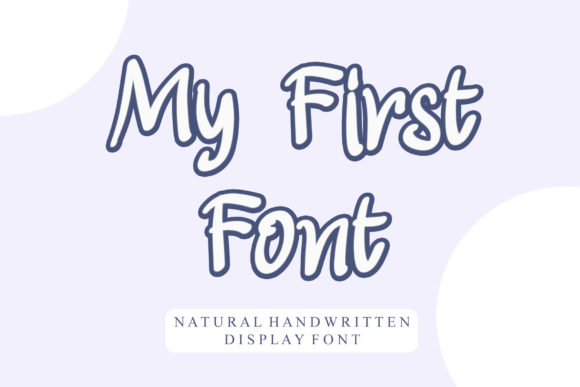
You know that feeling when you’ve been staring at a design for hours, cycling through dozens of fonts, and nothing quite clicks? You need something that feels friendly but not childish, trendy but not fleeting, distinctive but still readable. That’s the sweet spot where My First lives. It’s a brushed display font with a cool, approachable personality that manages to feel both contemporary and versatile. Whether you’re piecing together a brand identity, mocking up packaging, or designing social media graphics for a client, this typeface has a way of making projects feel finished without trying too hard.
What sets it apart from a lot of display fonts is that balance between style and function. Some decorative typefaces look gorgeous in a headline but fall apart the moment you try to use them in a real-world context. My First doesn’t have that problem. Its brushed strokes give it warmth and character, but the letterforms are clean enough to hold up across different sizes and mediums. That’s a surprisingly rare quality, and it’s exactly what makes it worth a closer look.
A Font With Personality That Doesn’t Overpower
Every font communicates something before a single word is read. Serif fonts whisper tradition and authority. Clean sans serifs signal modernity and minimalism. Script fonts lean elegant or playful depending on their weight. My First sits in a fascinating middle ground. It’s a display font, which means it’s designed to catch the eye, but its brushed texture gives it a handcrafted quality that feels personal rather than aggressive.
Think about the brands and designs that stick with you. They usually have a visual voice that feels intentional. My First works well for projects that need to feel approachable and creative without sacrificing professionalism. A small bakery updating its logo, a lifestyle blogger refreshing their site headers, a startup designing product packaging that needs to stand out on a crowded shelf—these are the kinds of contexts where this font shines.
It’s also worth noting that brushed fonts like this one tend to age well stylistically. They don’t feel as tied to a specific design trend as, say, ultra-thin geometric sans serifs or heavy slab serifs. That longevity matters when you’re building a brand identity you want to last more than a season.
Where This Font Actually Works in Practice
Let’s get specific. One of the biggest mistakes designers and business owners make is choosing a font based on how it looks in isolation. A typeface that looks stunning on a mood board might be completely wrong for a business card or a website navigation bar. My First is versatile enough to work across a range of applications, but it’s important to understand where it plays best.
For logo design, this font brings character without relying on gimmicks. Its brushed quality gives logos a sense of authenticity, which is especially useful for brands that want to feel handmade, artisanal, or creative. Pair it with a simple sans serif for body copy, and you’ve got a visual system that feels cohesive and intentional.
In packaging design, My First can do heavy lifting. Think about standing in a store aisle—what catches your eye? Usually, it’s packaging that has a clear visual hierarchy and a personality that matches the product inside. A font like this works beautifully for product names, taglines, or featured callouts on labels, boxes, and bags.
For social media graphics, readability at smaller sizes matters. My First holds up well in this context, especially when used for headlines or key phrases in quote graphics, promotional posts, or story templates. Its distinctive style helps content stand out in a crowded feed without looking cluttered.
On websites and blogs, it’s best used strategically. Display fonts aren’t typically ideal for long paragraphs of body text, but for hero sections, page titles, featured post headers, or call-to-action buttons, My First adds visual interest and reinforces brand personality. The key is pairing it with a more neutral body font—something like a clean sans serif or a classic serif—that handles the heavy reading without competing for attention.
Print materials like posters, invitations, and editorial layouts are where display fonts really come alive. My First has enough visual weight to anchor a poster design, and its friendly tone makes it a natural fit for event invitations, greeting cards, and workshop flyers. In editorial design, it works well for pull quotes, section headers, or feature story titles where you want to inject some personality into the layout.
Matching Typography to Your Project Goals
Choosing the right font isn’t just about aesthetics—it’s about communication. Before you commit to any typeface, including My First, it’s worth asking a few practical questions. What’s the tone of this project? Who’s the audience? Where will this design live—on a screen, on a printed page, on a physical product? The answers should guide your typography choices.
If your project needs to feel warm, creative, and approachable, a brushed display font like this one is a strong candidate. If you’re working on something that needs to feel ultra-corporate or highly technical, you might pair it with more restrained typography or reserve it for accent use only.
Font pairing is where a lot of designs either come together or fall apart. My First works well alongside neutral typefaces. Try matching it with a geometric sans serif for a modern, balanced look, or with a traditional serif for something that feels more editorial. The contrast between the brushed, expressive headline font and a quieter body font creates visual rhythm and keeps the design from feeling flat.
Always test your pairings in context. Set real copy, not just the font name repeated. Look at how letters interact, check spacing, and make sure the combination feels natural rather than forced. A font that looks great in a specimen sheet might need adjustments in tracking or size when placed alongside another typeface in a live layout.
Thinking About Licensing and Practical Details
If you’re using a font for anything beyond personal projects, licensing matters. My First is a commercial font, which means you’ll want to review the license terms before using it in client work, merchandise, or products for sale. Most premium fonts come with clear licensing that covers common commercial uses, but it’s always smart to double-check the specifics—especially if you’re planning to use the font across multiple projects or distribute designs that include it.
Also, take a moment to explore what’s included with the font files. Many premium fonts come with multiple styles, alternates, ligatures, or stylistic sets that give you more creative flexibility. Understanding what’s available means you can get more value from the typeface and avoid feeling limited by the default character set.
Making It Your Own
The best typography decisions come from experimentation. Download My First, set some real headlines, test it against your existing design assets, and see how it feels in the context of your actual work. Fonts are tools, and like any tool, their value comes from how well they serve the project at hand. This one has the visual appeal and versatility to become a regular part of your creative toolkit—whether you’re designing for clients, building your own brand, or just making something beautiful for the sake of it.